Web design and SEO are still sold as separate services, and that split costs local businesses real money. The designer builds something attractive, the SEO agency inherits something unrankable, and each side blames the other when leads stall. After rebuilding dozens of sites that looked fine but could not rank, we can say it plainly: the build is the strategy. This guide covers the seven failure points we see when two vendors split one website, and the results that follow when a single team owns both halves of the job.
- 7 Ways Separate Web Design and SEO Vendors Fail
- Website Redesign SEO: Anatomy of a Migration Disaster
- 5 Design Choices That Quietly Kill Rankings
- Speed Budgets: Performance Is a Design Decision
- Schema Baked In, Not Bolted On
- Integrated Web Design and SEO: Proof From Real Builds
- Web Design and SEO FAQ
7 Ways Separate Web Design and SEO Vendors Fail
When a design shop and an SEO agency split one website, accountability splits with it. Neither vendor owns the outcome that actually matters: ranked pages that generate calls. These are the seven failure points we find most often when auditing split-vendor builds.
- No keyword research before the sitemap, so the pages buyers actually search for never get built.
- Headings assigned for style, with H1 and H2 tags handed to whatever looked good in the mockup.
- Image-heavy hero sections that push Largest Contentful Paint past four seconds on mobile.
- JavaScript navigation that hides service and city links from crawlers.
- Redesigns that change URLs without redirects, erasing years of link equity overnight.
- No schema markup, because the designer considers structured data the SEO vendor’s problem.
- Finger-pointing when rankings drop, since neither contract covers the handoff between them.
Every one of these is invisible in a design review and obvious in a ranking report. That is exactly why web design and SEO have to sit with one accountable team.
Website Redesign SEO: Anatomy of a Migration Disaster
Here is how the disaster usually unfolds. A business owner approves a redesign in March. The new site launches in May with cleaner branding, a tighter menu, and brand new URLs. Nobody maps the old URLs to the new ones. Within three weeks, organic traffic drops 50 to 70 percent because every page Google had ranked now returns a 404.
We have audited this exact pattern many times. The designer delivered what was scoped: a new site. The SEO vendor was never told launch day was coming. Recovery takes three to six months, and some of the lost link equity never comes back.
An integrated team treats website redesign SEO as a migration project, not a reskin. Before launch we crawl every URL, map each one to its successor, write 301 redirects, carry over proven titles and content, and watch Search Console daily for two weeks after cutover. None of that happens when two vendors each assume the other has it covered.
5 Design Choices That Quietly Kill Rankings
Some ranking killers are locked into the mockup before a single line of code ships. These five show up constantly in our audits:
- Text trapped inside images. Headlines rendered as graphics are invisible to crawlers and to AI search engines.
- One combined services page. Ten services on a single URL means ranking for none of them individually.
- JavaScript-only navigation. If links to city and service pages render only on click, crawl coverage suffers.
- Oversized hero sliders. Multi-image sliders routinely add a full second of load time and get ignored by visitors anyway.
- Page builder bloat. Drag-and-drop themes ship two megabytes of unused CSS and scripts on every single page.
SEO friendly web design is not a visual style. It is a set of constraints applied before design begins: one page per service, real text in headings, crawlable navigation, and a hard ceiling on page weight. Our web design builds start from the keyword map, so the sitemap reflects what buyers search for instead of what the template offered. That only happens when web design and SEO share one roadmap.
Speed Budgets: Performance Is a Design Decision
An integrated team sets a speed budget before mockups exist: total page weight under one megabyte, Largest Contentful Paint under 2.5 seconds, interaction latency under 200 milliseconds. Every design choice is then weighed against that budget. A designer working alone has no such constraint, which is how six megabyte homepages happen.
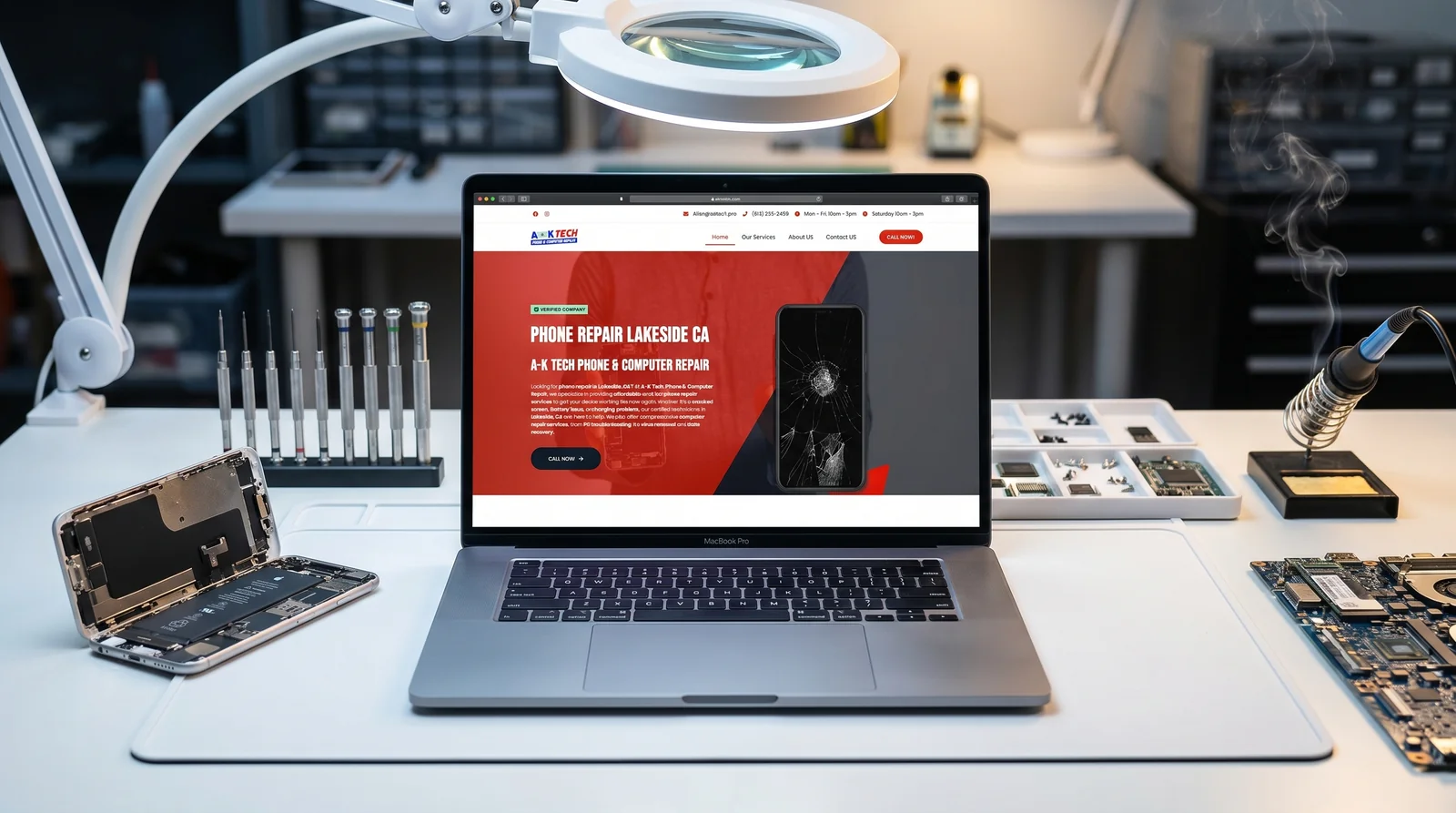
The proof shows up in PageSpeed Insights. When we rebuilt the A-K Tech phone repair site in El Cajon, performance was scoped as a design requirement rather than a post-launch fix. The site holds a 95+ PageSpeed score and calls rose 150 percent, because fast pages rank higher and convert the mobile visitors who refuse to wait.
Schema Baked In, Not Bolted On
Structured data tells Google exactly what your business is, where it operates, and what each page offers. LocalBusiness, Service, and FAQ schema should be written into the page templates during development, with fields wired to real business data. Bolting JSON-LD onto a finished site through a plugin is fragile and almost always incomplete.
On an integrated build, our SEO services team writes and validates the schema while templates are still in development, so every page ships markup-complete on day one. That head start matters most in local results, where structured data feeds knowledge panel and Map Pack signals. It is the quiet advantage of keeping web design and SEO under one roof.
Integrated Web Design and SEO: Proof From Real Builds
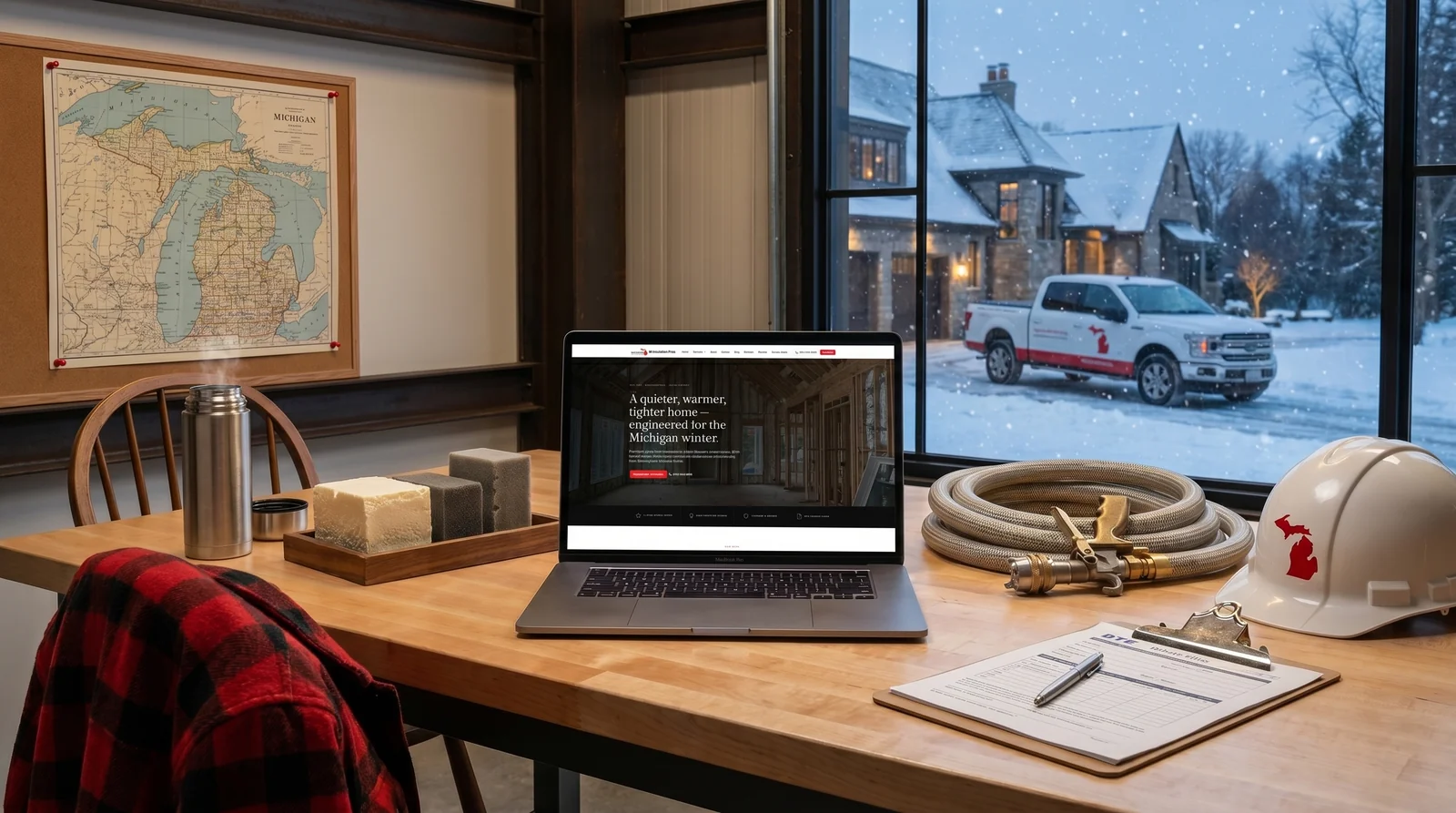
Michigan Insulation Pros came to us needing visibility across Metro Detroit. Because one team handled architecture, copy, schema, and location pages together, the site launched ranking-ready and now wins spray foam searches across 27 Metro Detroit service areas. The full numbers are in our Michigan Insulation case study.
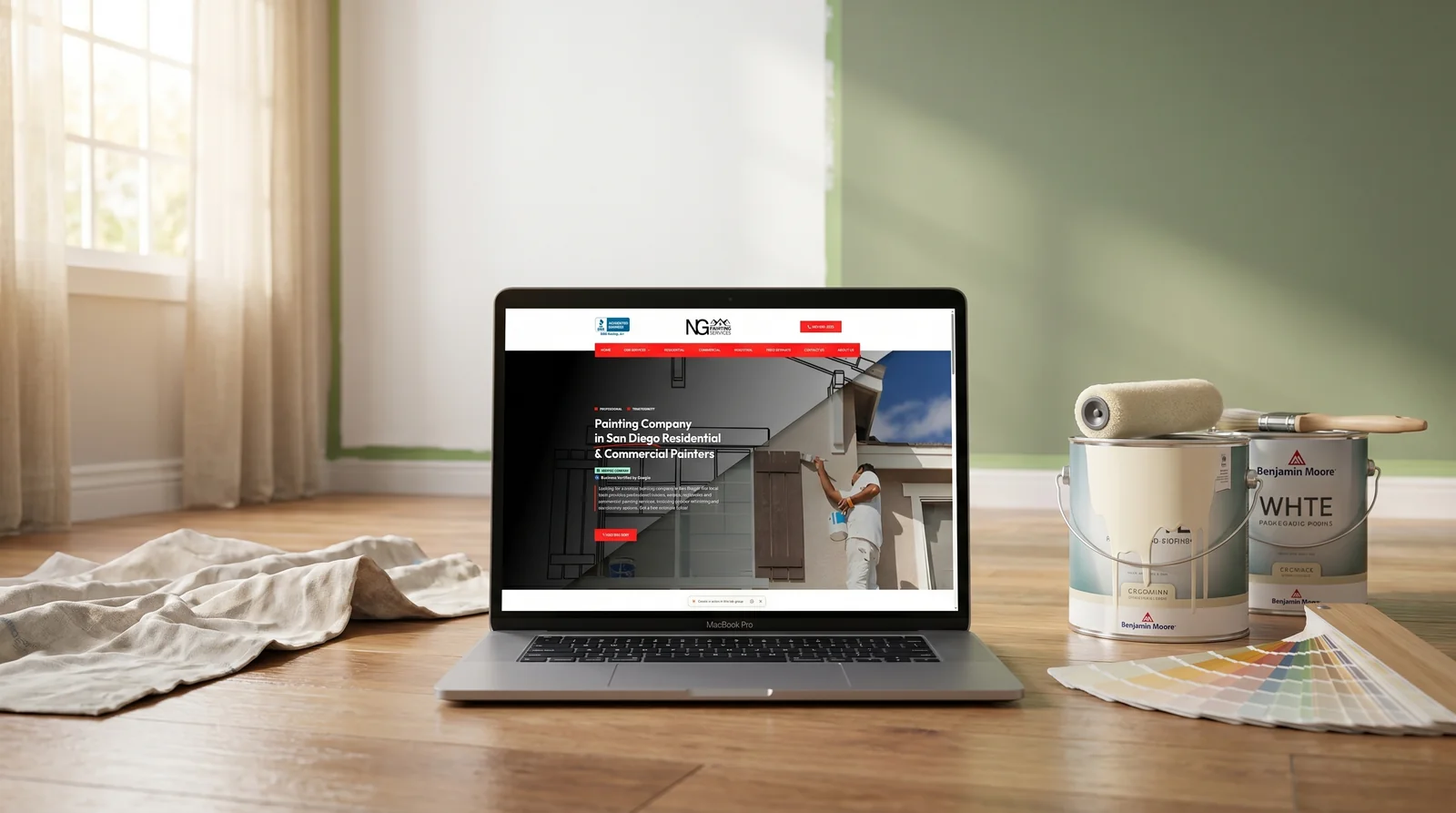
NG Painting followed the same playbook in San Diego: a keyword-mapped sitemap, city pages built into the design system, schema in the templates, and a speed budget enforced from the first mockup. The result was a 200 percent increase in quote requests and Top-5 rankings in 12 cities. Neither outcome required a post-launch SEO rescue, because there was nothing to rescue.
For owners comparing web design San Diego SEO options, that is the standard to demand: one contract, one roadmap, one team accountable for both the site and the rankings it earns.
Web Design and SEO FAQ
Should web design and SEO be handled by the same company?
Yes, whenever possible. The architecture, headings, page speed, and schema that determine rankings are all created during the build. When one team owns web design and SEO, those decisions get made correctly the first time. Split vendors create handoff gaps, duplicated costs, and finger-pointing when traffic drops after launch.
Does a website redesign hurt SEO?
Only when it is treated as a cosmetic project. Redesigns that change URLs without 301 redirects, delete proven content, or strip heading structure routinely cut organic traffic in half. A redesign run with a proper migration plan, a redirect map, and post-launch Search Console monitoring should hold rankings and usually improves them.
What makes a website SEO friendly?
SEO friendly web design means crawlable navigation, one dedicated page per service and city, real text headings instead of graphics, fast load times on mobile, structured data in the templates, and a URL structure that matches how customers actually search. Visual polish sits on top of that foundation, never in place of it.
How much does integrated web design and SEO cost?
Most integrated builds for service businesses run from a few thousand dollars for a focused local site to more for multi-city campaigns with ongoing SEO. Integration usually costs less overall than hiring two vendors, because nothing gets built twice and there is no post-launch rescue project to fund six months later.
How long until a new site starts ranking?
A site that launches with clean architecture, schema, fast pages, and optimized content typically shows movement in Google within four to eight weeks, with competitive local terms maturing over three to six months. Sites launched without SEO baked in often need a structural rebuild first, which adds months before real progress starts.
If your designer and your SEO vendor are pointing at each other while leads flatline, get a second opinion. UR Local Marketing builds web design and SEO as one project, and we will show you exactly what your current site is leaving on the table. Request a free local visibility audit, call us at 888-252-0251 Monday through Friday, 9am to 6pm Pacific, or reach our team anytime through 24/7 support.