
Choosing a local marketing consultant is one of the highest-leverage decisions a small business owner makes, and one of the easiest to get wrong. The right hire compounds month after month: stronger rankings, more calls, more booked jobs. The wrong hire burns six months of budget on vague activity reports and recycled blog posts. After auditing dozens of campaigns inherited from other providers, we see the same failure patterns repeat. This buyer’s guide covers the 9 questions that expose those patterns before you sign anything, plus the answer a competent consultant should give to each one.
- Why Vetting a Local Marketing Consultant Matters
- The 9 Questions to Ask Before You Hire
- How UR Local Marketing Answers These Questions
- Local Marketing Consultant FAQ
- Get a Free Local Visibility Audit
Why Vetting a Local Marketing Consultant Matters
Local marketing has no licensing board and no minimum standard. Anyone with a laptop and a logo can use the title, and plenty do. The performance gap is not small: in most service niches, the difference between a skilled local marketing consultant and an average one is the difference between owning the Map Pack and sitting invisible on page two. Vetting is your only quality control.
Before you hire a marketing consultant, run every candidate through the list below. The nine questions cover reporting, contracts, staffing, guarantees, and local proof, and each one has a strong answer and a red-flag answer. If you are still comparing delivery models, our guide to choosing a local business SEO company in San Diego breaks down agencies, freelancers, and consultants side by side. Use this article for the interview itself.
The 9 Questions to Ask Before You Hire
Print this list. Ask the questions in order, write down the answers, and compare candidates on paper. Patterns emerge fast.
1. What exactly will you do in the first 90 days?
Vague deliverables produce vague results. A strong answer names specific work: a technical site audit, Google Business Profile optimization, citation cleanup, review generation, and a content plan mapped to your services and neighborhoods, with a month-by-month sequence. The red flag is any version of “we will boost your visibility” with no scope attached, or a refusal to outline the plan until you pay. You are not asking for free labor. You are asking whether a plan exists.
2. Who actually does the work?
A surprising share of consultants are resellers who white-label the work to offshore providers and mark it up. That extra layer slows communication, dilutes quality, and means the person selling you strategy has never executed it. Ask who writes the content, who builds the pages, who manages the ad accounts, and where those people sit. A strong answer gives you names and roles. Evasive talk about “our fulfillment team” with no specifics is your cue to keep shopping.
3. How will you report results, and how often?
Monthly reporting is the minimum, and the report should track business outcomes: calls, direction requests, quote form submissions, and booked revenue where trackable. Access matters just as much. A serious San Diego marketing consultant gives you owner-level access to Google Search Console, Google Business Profile, and analytics, so the data is yours to verify at any time. The red flag is a PDF of screenshots from accounts you cannot log into. If you cannot audit the numbers, that is marketing, not reporting.

4. What does the contract and exit look like?
Twelve-month lock-ins protect the provider, not you. A confident consultant earns the renewal every month, so look for month-to-month terms or a short initial commitment with a written off-boarding process. Ask directly: if I cancel, what do I keep, and how fast do I get it? Cancellation penalties, vague answers about asset transfer, or agreements that auto-renew for another full year are all signs you are funding their security, not your growth.
5. Do you guarantee first-page rankings?
This one is a trap, and you should set it deliberately. The only honest answer is no. Google’s own SEO documentation warns against anyone promising guaranteed rankings, because no outside party controls the algorithm. Providers who guarantee page one typically rank you for zero-volume keywords nobody searches, or use shortcuts that trigger penalties later. A strong answer offers a guaranteed process, full transparency, and projections built from comparable campaigns.
6. Can you show local proof?
Generic national screenshots prove very little. Ask for named, verifiable results from service businesses in markets like yours. When we get this question, we point to NG Painting, which reached the Top 5 in 12 cities and grew quote requests 200 percent, and Key Korner, a locksmith now visible across 40 plus San Diego neighborhoods with a 5.0 rating. Then verify: check the rankings from your own phone. A provider hiding every result behind confidentiality has something to hide.
7. Who owns the website, content, and accounts?
You should own everything: the domain, the website files, the Google Business Profile, the ad accounts, and every page of content you paid for. Some providers build on proprietary platforms specifically so the site dies when you leave. Get ownership in writing before work begins. The red flag phrase to listen for is any variation of “the website stays with us if you cancel.” That is rent, not an investment.
8. How do you price, and what is not included?
Ask for line items. A genuine local marketing expert knows their numbers and can tell you what the retainer covers, what counts as extra, and where ad spend sits. Common surprises hide in landing pages, photography, content beyond a monthly quota, and setup fees that resurface. Bundled pricing that cannot be itemized usually conceals thin deliverables. You do not need the cheapest quote. You need to know exactly what a dollar buys.
9. How do you define success beyond rankings?
Rankings are a means, not the end. A strong answer connects every deliverable to calls, booked jobs, and revenue, and names the single metric they would stake their fee on. For Mal Al Sham, a restaurant in El Cajon, the number that mattered was a 250 percent increase in online orders, not any individual keyword position. If a consultant defines success purely as “more traffic,” they are optimizing for their report, not your business.
How UR Local Marketing Answers These Questions
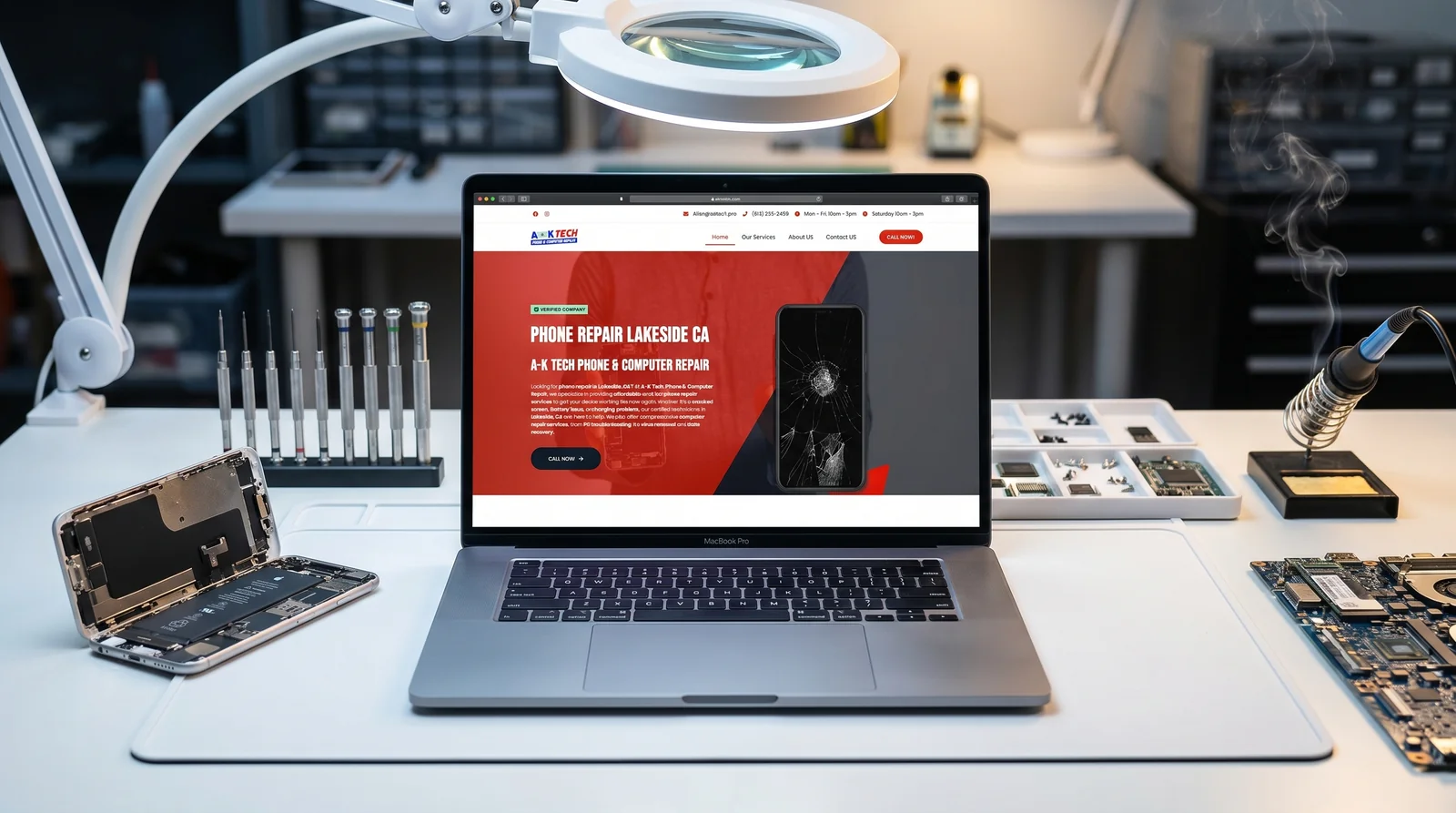
We built UR Local Marketing to answer these questions the way a local marketing consultant should: in plain numbers, in writing, before any agreement. Strategy and execution stay in-house. Agreements run month to month, and every asset, from your domain to your Google Business Profile, is registered to you from day one. Reporting is live, with owner access to every data source plus a monthly results call. We never guarantee rankings. We show documented outcomes instead: A-K Tech in El Cajon grew calls 150 percent on a site scoring 95 plus on PageSpeed, and Michigan Insulation Pros now ranks across 27 Metro Detroit communities.

If you want to see scope, deliverables, and process before a single phone call, our local marketing company in San Diego page lays all of it out. Bring these nine questions to that page first, then to the call. We are comfortable being graded against our own checklist.
Local Marketing Consultant FAQ
How much does a local marketing consultant cost?
In San Diego, most credible retainers run between $750 and $2,500 per month depending on competition, service area size, and scope. One-time audits typically cost $300 to $1,000. Judge price against cost per lead, not the invoice alone. A $1,500 retainer producing 40 qualified calls beats a $600 retainer producing three. Ask every candidate to model expected cost per lead for your market.
What is the difference between a consultant and an agency?
A consultant is usually one senior person who handles strategy and either executes the work or oversees it. An agency adds a team, defined processes, and more capacity, sometimes at the cost of direct senior access. The label matters less than the answers to the nine questions above. Judge who does the work, what you own, and how results are reported, not the word on the business card.
How long before local marketing produces measurable results?
Expect early movement in 30 to 60 days from Google Business Profile optimization and citation cleanup, with meaningful ranking and call growth in 90 to 180 days for most service niches. Highly competitive categories in a major metro take longer. Any local marketing consultant promising dramatic results inside two weeks is selling something other than search visibility.
Should I hire a national firm or a San Diego marketing consultant?
Local knowledge carries real weight in local search. A San Diego marketing consultant already knows the neighborhoods, the competitive landscape, and how customers in this market search and buy. National firms can be excellent, but verify they have produced results in mid-size metros like ours rather than only in national e-commerce. Apply the local proof question hard in either case.
Which marketing consultant questions matter most on a short call?
If you only have 15 minutes, ask three: who does the actual work, what will you do in the first 90 days, and do you guarantee rankings. The first exposes resellers, the second exposes the absence of a plan, and the third exposes dishonesty in under ten seconds. Strong answers to those three usually predict strong answers to the rest.
Get a Free Local Visibility Audit
Hiring a local marketing consultant should feel like due diligence, not a gamble. Put us through all nine questions. We will answer each one in plain language, then back it up with a free local visibility audit covering your rankings, Google Business Profile, site speed, and top three competitors. Call 888-252-0251, Monday through Friday, 9am to 6pm Pacific, or send your details through our 24/7 support page and we will respond the same business day.